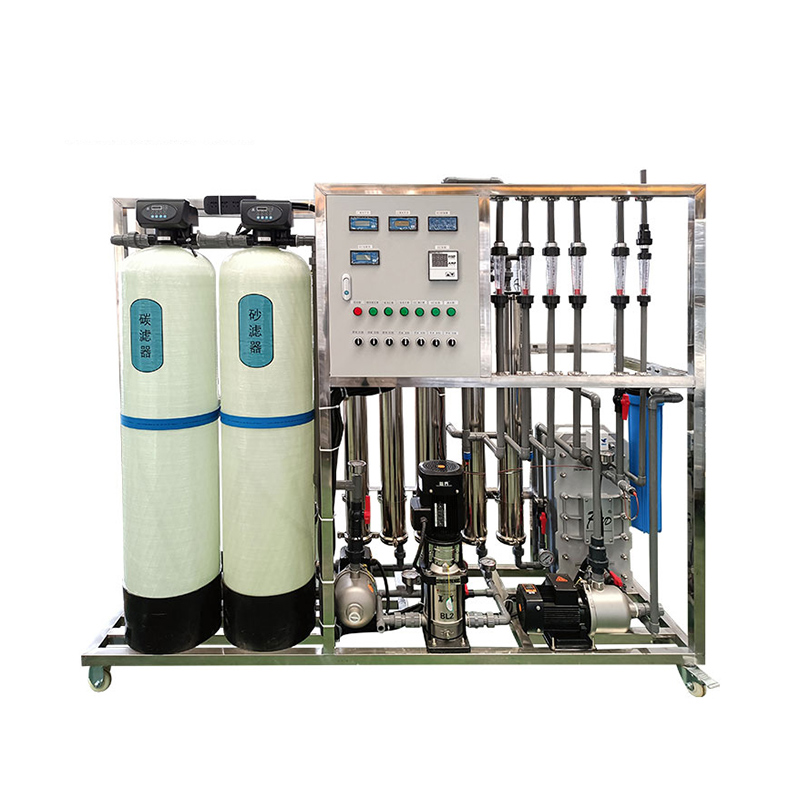
In today’s rapidly evolving industrial landscape, the demand for efficient, sustainable, and automated cleaning solutions has never been higher. Industrial water treatment equipment plays a pivotal role in ensuring that manufacturing and processing facilities meet stringent quality, environmental, and operational standards. Recent developments in this sector highlight an exciting phase of growth and innovation, driven by companies committed to integrating cutting-edge technology with customized service solutions.
One such company making significant strides in this domain is Jiaheda, a high-tech enterprise that has established itself as a leader in the field of industrial cleaning equipment. With a comprehensive business model that encompasses pre-sales overall program planning, independent research and development, manufacturing, equipment installation and commissioning, as well as system after-sales service, Jiaheda exemplifies the integrated approach necessary for modern industrial solutions.
### Technology at the Core of Industrial Water Treatment
The industrial water treatment market comprises a broad spectrum of equipment designed to remove contaminants, ensure regulatory compliance, and enhance operational efficiency. These technologies can range from ultrasonic cleaning systems to advanced spray cleaning lines and flat cleaning equipment. Given the often complex and varied requirements of different industries—from automotive and electronics to food processing and pharmaceuticals—the ability to tailor solutions is critical.
Jiaheda’s expertise lies in developing a suite of industrial non-standard automated cleaning and drying equipment that addresses these diverse needs. By combining sophisticated engineering with automated control systems, their solutions reduce manual labor, minimize errors, and promote higher throughput. Furthermore, the company’s commitment to research and development ensures their technologies incorporate the latest advances in ultrasonic cleaning technology, solvent recycling, water reuse, and emission reduction.
### Ultrasonic Cleaning: Precision and Efficiency
Among the standout technologies in Jiaheda’s product portfolio is ultrasonic cleaning equipment. Ultrasonic cleaners harness high-frequency sound waves propagated through a liquid medium to generate cavitation bubbles. When these bubbles collapse, they create micro-jetting actions that effectively dislodge contaminants, even from intricate or hard-to-reach surfaces.
Ultrasonic cleaning offers numerous advantages, including reduced chemical usage, shorter cleaning cycles, and the ability to clean delicate components without damage. This makes it especially valuable in sectors requiring pristine cleanliness standards, such as semiconductor manufacturing and precision instrumentation.
By designing ultrasonic cleaning systems tailored to specific customer requirements, Jiaheda maintains a competitive edge. Their ability to integrate such systems seamlessly with auxiliary spray cleaning lines and drying equipment enables end-users to benefit from turnkey cleaning solutions that enhance productivity and lower operational costs.
### Spray Cleaning Lines and Flat Cleaning Equipment
Complementing ultrasonic cleaners are spray cleaning lines and flat cleaning equipment—two critical components in many industrial cleaning workflows. Spray cleaning lines typically use pressurized jets of cleaning agents to wash parts moving along conveyor systems. This technique is suitable for components with moderate surface contamination and provides scalability for high-volume operations.
Flat cleaning equipment, on the other hand, is designed for cleaning planar materials such as glass panels, metal sheets, and electronic substrates. The equipment incorporates precision cleaning processes that ensure uniform removal of dust, oils, and residues without compromising the integrity or quality of the material surface.
Jiaheda’s development of these systems emphasizes automation, precision control, and environmental responsibility. Automated cleaning lines not only increase throughput but also minimize chemical consumption and wastewater generation. As global regulations around industrial discharge tighten, such innovations become crucial for companies to remain compliant and sustainable.
### Comprehensive Service Model Drives Customer Satisfaction
A distinguishing factor for Jiaheda is its holistic service approach, integrating pre-sales consultation with post-sale support. The company engages closely with clients during the planning phase, ensuring that every cleaning solution is optimized for the unique requirements of their production environment. This includes assessing the types of contaminants, throughput needs, spatial constraints, and regulatory considerations.
Following the design and manufacturing phases, Jiaheda manages the equipment installation and commissioning on-site, guaranteeing a smooth transition into operation. Their ongoing system after-sales service further ensures equipment reliability, with preventative maintenance, troubleshooting, and upgrades as needed.
This end-to-end service model reinforces customer confidence and fosters long-term partnerships. Clients across industries benefit not only from state-of-the-art cleaning equipment but also from expert guidance throughout the lifecycle of their investment.
### Meeting the Future Demands of Industrial Cleaning
As industries embrace digital transformation and green manufacturing principles, the role of intelligent industrial water treatment equipment will expand. Companies such as Jiaheda are well-positioned to lead this evolution by delivering integrated cleaning solutions that enhance productivity, minimize environmental impact, and comply with evolving standards.
Innovations in sensor integration, IoT connectivity, and data analytics are paving the way for smarter cleaning systems capable of real-time monitoring, adaptive process control, and predictive maintenance. By leveraging these technologies, industrial facilities can reduce downtime, optimize resource use, and ensure consistent product quality.
Moreover, the growing emphasis on water conservation and waste reduction underscores the importance of effective water treatment and recycling within cleaning systems. Solutions that combine advanced water filtration, reclamation, and reuse will be vital for industries aiming to achieve sustainability targets.
### Conclusion
The advancement of industrial water treatment equipment marks a significant milestone in enhancing manufacturing efficiency and environmental stewardship. With its comprehensive capabilities in research, manufacturing, installation, and after-sales service, Jiaheda exemplifies a high-tech enterprise driving innovation in ultrasonic cleaning, spray cleaning lines, flat cleaning equipment, and automated drying systems.
By offering customized, integrated solutions that meet the specific demands of modern industries, Jiaheda not only elevates industrial cleaning standards but also supports companies in their pursuit of operational excellence and sustainable growth. As the industrial sector continues to evolve, such technological leadership and service-oriented approach will be key to shaping the future of industrial water treatment and cleaning solutions.